Virginia Home Grown
International Crops
Season 26 Episode 4 | 56m 46sVideo has Closed Captions
Discover something new for your vegetable garden!
Randy Battle visits Esther Manor Farm in Beaverdam with Patience Fielding to learn how crops from West Africa can be grown in Central Virginia. Peggy Singlemann tours Happy Vibes Farm in Fauquier with Swathi Gaddam to discuss herbs and produce from India. Engage with us or watch full episodes at Facebook.com/VirginiaHomeGrown and vpm.org/vhg. VHG 2604 June 2026.
Problems playing video? | Closed Captioning Feedback
Problems playing video? | Closed Captioning Feedback
Virginia Home Grown is a local public television program presented by VPM
Virginia Home Grown
International Crops
Season 26 Episode 4 | 56m 46sVideo has Closed Captions
Randy Battle visits Esther Manor Farm in Beaverdam with Patience Fielding to learn how crops from West Africa can be grown in Central Virginia. Peggy Singlemann tours Happy Vibes Farm in Fauquier with Swathi Gaddam to discuss herbs and produce from India. Engage with us or watch full episodes at Facebook.com/VirginiaHomeGrown and vpm.org/vhg. VHG 2604 June 2026.
Problems playing video? | Closed Captioning Feedback
Where to Watch Virginia Home Grown
Virginia Home Grown is available to stream on pbs.org and the PBS app.
Providing Support for PBS.org
Learn Moreabout PBS online sponsorship(light music) (birds chirping) >>Food is a great connector, and we want to use food to connect with all people, people from all backgrounds.
I just want to build my community.
Having that connection with people is so healing, and it's the natural way we're born to be, to connect through food.
(birds chirping) >>I learned I could companion plant ginger and turmeric, and in that bed, we have all along turmeric planted along with tomatoes.
They all thrive together.
>>Production funding for "Virginia Home Grown" is made possible by: Strange's Florists, Greenhouses, and Garden Centers: serving Richmond for over 90 years, with two florist shops, two greenhouses, and a garden center, located throughout the metro Richmond area.
Strange's: Every Bloomin' Time!
And by: Sally R. Youngs, in honor of the Grateful Deadheaders Resident Interest Group.
(birds chirping) And by.
(birds continue chirping) (bright music) (bright music continues) (bright music continues) (bright music fades out) >>Welcome to "Virginia Home Grown."
Across the state, we're still experiencing a challenging growing season, with crazy temps, high humidity, and sporadic storms.
I can't think of a better time to explore international crops, specifically vegetables from warmer, monsoon-type climates.
Did you know the majority of veggies growing in our gardens are international crops?
For example, carrots are native to Central Asia, while tomatoes and potatoes are from the Andes Mountains of South America.
With so many new plants to explore today, we encourage you to send in your questions to vpm.org/vhg.
We always enjoy hearing from you.
A little later, we'll visit a farm in Fauquier County growing crops from India.
But first, Randy Battle visited Esther Manor Farm in Beaverdam to meet Patience Fielding and learn about crops from West Africa.
Let's get going.
>>Esther Manor Farm, I named it after my mother, Esther.
The values I now have, the values of hard work, patience, giving back, I got that from her.
My grandmother also, (speaking in a foreign language), is somebody who I learned how to farm from.
Her farm, her place was a place of safety, a place of abundance.
And so I wanted to honor my ancestors and the women who came before me.
>>Well, they did a great job instilling this craft in you.
How did you get started?
>>So we started during the pandemic.
As you know, during the pandemic, we had food shortage.
And we wanted to grow crops that are native to Africa, because the crops we grow are not found in regular, mainstream shops.
So we grow crops like African garden egg.
>>African garden egg- >>African garden egg.
>>What a strange name.
>>I know, it's if you can see here, you have some crops, it's round.
I think it's in the eggplant family.
>>Okay.
>>But you have varieties of them that are green.
Some of them are white, and we eat them in stews.
We eat them raw.
We eat them, we serve them sometimes in countries like Nigeria when people visit, you serve with peanut butter as a sign of welcome.
We also have bitter leaf.
Bitter leaf is a staple in Cameroon and Nigeria.
In Cameroon, there's a popular dish called Ndole.
It's made with peanuts, beef, dried fish.
It's very, it's a staple in Cameroon, very tasty, very delicious, like a national dish.
And so bitter leaf is the main vegetable that is used.
And so lots of Cameroonians in the United States, they rely on bitter leaf.
We also have peppers.
If you notice, in Cameroon and most African countries, we eat spicy and hot.
>>Okay.
>>No meal is complete without peppers, and so here, I have a variety of peppers: Scotch bonnet, habanero, bell peppers.
Because every meal is so spicy.
>>Right.
>>And we also have okra.
>>Okay.
>>And again, okra is a staple in Africa.
We eat okra with fufu.
We prepare that sometimes with egusi.
Sometimes it's used as a thickener.
We also have my favorite: njama njama.
It's what my grandmother, (speaking in a foreign language), that's what she ate every single day with fufu.
>>Njama njama.
>>Njama njama, but my grandmother would make that with fufu and we would eat that.
It was so, so healthy.
And so that's a favorite.
So in that corner right there, they're still growing.
They haven't come up yet, but that's a area for njama njama.
So we want to create a space for food, for African food, not just for Africans, but for our community.
We wanna share this with members of our community just for healthy food.
>>Now, it's interesting that these plants are mostly native in Africa.
>>Mm-hmm.
>>Now, how does it vary as far as the climate and growing conditions compared to being here versus Cameroon?
>>The summer months are very similar.
The weather and the temperatures are very similar to Cameroon.
That's why they survive in these temperatures.
So in Cameroon, we just have two seasons: the rainy season and the dry season.
Right here we have four seasons.
So spring up until November is kinda very similar to Cameroon weather, and the soil is also very similar.
So we amend the soil using compost, and that's what makes it easy to grow, right?
Soil here was very clay.
Then we used compost to amend the soil so it's very similar to the soil in Cameroon where they grow.
And that's why you can have such healthy crops, because it's very similar to the countries of origin in terms of the temperature and the soil.
>>So they feel right at home?
>>They feel right at home in Virginia.
>>That's awesome.
(Patience laughing) Now, what are some things that maybe you have tried to grow that didn't do so well here on the farm?
>>Didn't do so well, so when we started, I was just trying a lot of crops.
And one crop that we had was fluted pumpkin.
What happened was, the deer loved it more than we could.
So by the time it came to harvesting, it had all been eaten up by the deer.
In Africa, it grows in the forest, lots of shade, so we have to find shady areas where to grow them.
We have a huge market of people who consume fluted pumpkin, and so that's one crop that is really desired by people from Africa.
>>And not only is this just for people who eat all African food.
This is for the community.
This is for people of all ages, race.
You guys are open to all types of people.
>>Absolutely.
I mean, food is the great connector, and we want to use food to connect with all people, people from all backgrounds, all abilities, all races.
And we do that by, we invite people to come in and tour the farm, look at the crops.
Every October, we have a farm-to-table.
We prepare the food from the land.
We have a big old giant party in back.
We celebrate, we have music, we have drums.
We invite everybody because we want to share this with our community.
Even though I'm from Cameroon, America is now my home, and I consider, "What can I give back?
How can I build?
How can I give back to my community something that is unique and to me and to Africa and to Cameroon?"
And so these crops is what's unique.
And so I wanna bring that to my community, not just in Beaverdam, but in Virginia and in the USA.
And so we invite everybody to come visit, to come taste, to come have some of this foods, which is so nutritive.
>>And that's the good thing.
You are giving so much to the community.
How can the community give back to you?
Volunteering or how does that work?
>>Great, and we would love to have volunteers.
As you well know, Randy, farming is hard.
>>Yes, it absolutely is, and it takes patience.
>>Lots of patience.
It does.
>>(laughing) You have the perfect name.
>>It does, (laughing) yes, I do.
This past year, we've been very fortunate to have volunteers from various organizations, community foundation, Randolph-Macon sends students, Shalom Farms sends volunteers.
So they've been able to come in and help us and do this work.
So we're very grateful, but you know it doesn't end there.
Every season demands a different kind of labor.
So right now, we're finished planting.
We're gonna need volunteers to help weed, because we do not use any pesticides or herbicides.
Everything is natural.
So we hand weed, because we eat from this farm, and so we wanna make sure that what we give our community's also healthy.
So we need volunteers.
>>Now, where do you see this going in the future?
>>In the future, I just want to build my community.
Having that connection with people is so healing, and it's the natural way we're born to be, to connect through food.
And I want to offer this space as a space (rhythmic music) to grow food, a space where everybody sees themself, people of all abilities.
And in addition, I grow other herbs, so that even if you cannot identify with some of the crops, I mean you can pick a pepper, a bell pepper, some herbs.
You can do tea.
So I want this space to be for us all, a space to come together, celebrate, grow food, and just be a healthy community.
>>Oh, that's awesome.
Thank you so much for having us, Patience.
It's been a great day.
And I have enjoyed everything about this farm.
It feels peaceful and we were so glad to be here.
>>Thank you, thank you, my pleasure.
>>Thank you.
>>Thank you.
>>I'm fascinated to learn the soils of Virginia and Cameroon are similar.
We need to realize our growing conditions in Virginia are not so unique.
There are others facing similar challenges.
And Randy, it looks like you've brought some seeds here today.
So what are we gonna be talking about?
>>Yes, Peggy, what I've got is, I brought in three different varieties of seeds.
All are native to Africa.
>>Wonderful, wonderful.
>>So today, what we're gonna talk about is planting and starting your seedlings.
>>Fantastic.
>>So what we have here today is my compost- >>Mm-hmm.
>>That I've been growing over the couple of years.
And compost is simply taking all of your old leafy greens and different things and letting them ferment and yeah, become into- >>Wonderful soil, yes.
>>Something like this.
Yes.
>>Plants make gorgeous soil, don't they?
(laughing) >>Yes they do.
>>Yes.
(laughing) >>Now, this is my regular gardening soil.
>>Oh, Randy, look at that.
>>I always refurbish my gardening soil from the previous year.
You take what you have and you make it work.
>>Absolutely.
>>So this is my soil from my previous year.
And this is store-bought soil container, as you can see, the perlite in there.
That's the difference from this richness.
>>Yes.
>>Versus.
>>Not so rich.
(laughing) >>Not so rich.
>>Yes.
>>So what we've done is, we've combined all three into this container.
>>Yeah.
>>Well, we did the two- >>Yeah, the two.
>>In this container.
>>Mm-hmm.
>>Yeah.
So I have three different types of seeds that we're gonna start.
Will you help me?
>>I'd be happy to, yes.
Thank you for asking.
>>Okay, so what we're gonna do is here's your container.
Here's mine.
And I'm just gonna take a scoop of soil and place it right into the cells.
>>I'm so glad to see you, you reuse your cell packs too.
I never throw them away.
>>Yes.
>>I just wash 'em off- >>Yes.
>>And reuse 'em again.
>>Wash 'em off and reuse them again.
Here you go.
>>Thank you, sir.
>>You are very welcome.
>>Uh huh.
>>And I like to just give it a little tap.
>>Mm-hmm.
Get the air out.
>>Don't press it down.
Mm-hmm, get the air out.
>>Well, why don't we wanna press it down, Randy?
>>Well, when I say press it down, I don't want you to mash it down.
>>Okay.
>>Just give it a slight tapping, like so.
>>So those baby roots can grow.
>>Absolutely.
>>Yes, yes.
>>So what we're gonna start off with is jute leaf.
>>Mm-hmm.
>>Now, this is a green native of Africa.
And it comes in a pod.
And what a pod is, the seeds are inside.
>>Yes, that is not the seed.
That is just the housing for it, we'll call it, yes.
>>Mm-hmm, the seeds are inside.
>>Yes.
>>So what I like to do is I just take my hand and gently press, ooh.
As you can see.
>>They're falling apart already, yeah, uh huh.
>>They're coming on out.
They're coming, ooh, look at that.
>>Yes, they are popping.
And there's a lot in there.
(laughing) >>There's a lot in here.
>>Yes.
>>Yes, you guys, one pod has a ton of seeds.
>>Mm-hmm.
>>So what we're gonna do is take our container.
>>I'm gonna do two and you do two?
>>Yeah.
>>Okay.
>>I'll put two.
And if you happen to drop three, it's okay.
>>It happens, yes.
>>Yeah.
>>Mm-hmm.
>>And by these seeds being so small.
>>You can put a few more than two?
>>Yeah.
>>Yeah, okay.
>>I think I'll do three or four.
>>Okay.
And I'm gonna- >>Yeah.
>>You know, I'm gonna press 'em down just a little bit.
I'm not- >>Uh huh.
>>Putting 'em down to- >>Because what we're gonna do is we're gonna take a little bit more of our- >>Soil?
>>Soil, uh huh.
And just sprinkle it over.
>>Okay.
>>Yeah.
>>Let me just.
>>That's why you don't have to press it down so much.
>>I think- >>Just take a little bit.
>>Mm-hmm.
>>And sprinkle over.
And they have a nice well bed where they can grow and thrive.
All you need is your soil, your seeds, water, and sunlight, and you can grow whatever you like.
>>Absolutely.
>>Okay?
So the next thing we're gonna do, we're gonna try njama njama.
>>Okay.
>>Yes.
(Peggy laughing) This is from Cameroon.
>>Mm-hmm.
>>Africa as well.
These seeds are very tiny.
>>So tiny.
>>Uh huh, very tiny.
>>Oh my gracious.
Very tiny.
>>Very tiny.
And I have this little container here.
This is just one of my little recyclable containers.
>>Mm-hmm.
>>Here's one for you.
>>Thank you.
Well, I had two more cell packs.
>>And we could- >>Yeah.
>>Oh, you have two more?
>>Yeah, I have two cell packs.
>>Okay.
>>But I'm gonna put some of this back.
You continue on yours.
>>All right, I'll just take a couple and put in here.
And just sprinkle a little bit over top.
>>Mm-hmm.
>>And just give it a light pressing.
Because a lotta times, if you mash down real hard, it's hard for them to come up.
It's hard for your seedlings to break through the soil.
So we just wanna give it a little pressing.
>>Sounds good, ever so gentle, yes.
>>Yes, yes.
>>Well, Randy, this has been wonderful.
We need to do water.
One more thing was water, just a wee bit.
>>Water.
>>But.
>>That's yes.
>>But if we water here, we're gonna make a mess.
(laughing) >>We have our watering container.
>>Yes.
>>Which we know that we need to do, but as you said, we were gonna.
>>We were right.
>>We're gonna be safe.
>>Yes.
>>And here is okra.
Now, a lot of people don't know that okra is native of Africa.
>>Yes, you're right, and they're so familiar and it's a crop that we've made here, you know, that we grow here in the US.
>>Yes.
>>Prevalently, in the South particularly.
>>Yes.
Absolutely, I grow them in my backyard, and I love 'em.
So you have enough space for some okra?
>>Nope, but I think too we're out of time, so I think we're gonna have to hold off on planting the okra.
>>Okay, well- >>Okay?
>>It's been fun and keep growing.
Live, love, laugh, grow stuff and eat it.
>>Absolutely.
Absolutely, and I love- >>Okay?
>>I love doing it with you, Randy.
>>I love doing it with you as well.
>>Yes.
And now we're going back to Esther Manor Farm and answer the questions you've sent in regarding West African crops.
>>And our first question of the day, Patience, is, "Can these plants grow," speaking of the plants that you are growing, "in warmer parts of Virginia, "such as Tidewater?"
>>Absolutely.
So these crops originally grew in tropical climates, Cameroon, Nigeria, West Africa.
So it needs heat, good soil, and water.
So if the area in which you're living in Virginia, if it's hot, has good soil and water, these plants could absolutely grow in those areas.
>>Okay, that's good to know.
Also, can any of the African plants that you grow become aggressive, take over the garden?
>>No, the crops that I grow, pepperS, okra, garden egg, they are not invasive.
Some of them, for example, waterleaf will come back as the seeds go into the ground and it pops back up the next season.
But it's, it doesn't become a invasive, none of the crops I grow are invasive.
Yeah.
>>So a lot of these crops automatically come back.
>>So the waterleaf would come back, the jute leaf would come back because the seeds go in the ground and they would come back and sometimes the roots don't get frozen.
And when winter is over, they pop back up.
But bitter leaf wouldn't come back and it's not invasive.
African garden egg is not invasive.
You'd have to replant every season.
But water leaf, njama njama, jute leaf, those would come back the following year.
>>Okay.
Okay, next we have, Karen wants to know "What are some uses for lemongrass stalks?"
>>Lemongrass stalks, you can use them as a tea.
So you boil them and as a tea and use them.
When I was growing up, I remember my grandmother, whenever I had a fever, my grandmother would boil lemongrass, papaya leaves, and also guava leaves and she would make me inhale it.
So we've used that when you have a, I mean when I'm filling insomnia, I drink lemongrass tea, so it's good for teas.
We also use it as in soups for example, there's a soup called Pepper Soup in Cameroon, which we sometimes drink when we're cold, when it's cold it warms you up.
We put lemongrass as well, yeah.
>>Okay.
>>So lemongrass gives a nice kick to any meal that you wanna use, yeah.
>>That sounds good.
>>Yeah.
>>Mary wants to know, "Are Virginia soil issues different than in Africa, "which is more productive?"
>>That's a good question.
So different soils, so where we are, the soil is very clay.
I've had to amend the soil as they say.
I use compost a lot.
We also do, we also have a compost where we do all the plants and food items from the home.
We dump it and then we mix it into the soil.
So we're constantly amending the soil to make it nutritive for the plants.
So plants will take nutrients from the soil.
So it's very important to amend.
So we do amend with compost every year.
So we get the best produce every year.
So even though the soil, we have some parts that are clay and not too nutritive.
We do amend every year to make sure that the plants get the nutrients that they need.
>>Yeah.
That's how I do- >>Yeah.
>>In my garden.
This is a good one for you.
Doug wants to know, "Where can I find recipes "that are authentic to these crops?"
>>Great question.
So at Esther Manor Farm we're doing, we have a recipe, we have recipe cards because we do understand that the crops are not native to Virginia.
So most people would want to, what do I do with this crop?
So what I've begun this year is recipe cards.
We have recipes for bitter leaf, recipes for okra, recipes for jute leaf, and different variations that you could use both in a way that is traditional to Africa and the way that we have amended it to the American palate.
For example, you tasted bitter leaf, it's very bitter.
>>Yes.
>>So somebody tasting that for the very first time might not be very open to it.
So we've found ways to include other produce in a way that it becomes palatable, like bitter leaf juice, bitter leaf smoothie, but again, bitter leaf soup, bitter leaf stews in a way that people do taste in the authentic African recipe and also get the nutrients.
And also at a farm to table, that's where we do all the authentic African meals because people wanna show them what you can do with these crops.
So again, we do recipe cards.
When you come to farm for, to Esther Manor Farm, we do group dinners, for example, corporate dinners or group dinners and if you're interested, so people can really taste what we're growing at our table at Esther Manor Farm.
>>And finally, Kathy wants to know, "What are some of the easiest crops to grow, "African crops right here in Virginia?"
>>I would say okra.
Okra is very easy to grow.
All you need to do is put the seeds in the ground with water and sunlight and you have a good crop.
>>I love okra.
>>Okra is great and you can use okra for so many recipes.
Fried okras, okra as a soup, okra water is also very popular.
So okra is a good crop, an easy crop to grow, easy to manage.
Another crop that is easy is bitter leaf.
Bitter leaf, all you need again is very heat resistant.
So in areas where there's drought and where there's little rain, bitter leaf would sustain the heat and give you a good crop.
And it needs all it needs, again, it's sun, water, and a good soil and it's easy to grow.
You don't have to water every day, it just grows by itself without very little attention.
African garden egg is another easy plant to grow and it gives you so much fruit.
It just keeps giving up until the last frost.
So you harvest quite a good harvest.
And again, it is drought resistant.
It will sustains the heat, needs very little water.
And with with African garden egg, you can also eat the leaves.
So you eat both the fruit and the leaves.
And so that's a crop that would really give you a good fresh produce for a season.
And all very easy to plant, maintain, harvest.
And we do have recipes, but again, you can very similar to eggplant in terms of the texture.
So you can customize to fit just like you would cook eggplant or you would eat it raw depending on your taste, yeah.
>>Okay, well thank you for that and thank you so much for having us.
It's been my pleasure.
It's been informative and we look forward to returning to Esther Manor Farm in the future.
>>Thank you.
>>Thank you so much for being here.
>>Thank you, thank you.
(rhythmic music) >>What we have here today are turnips and collard greens.
These are Delta Blues collards and Purple Globe turnips.
And you think of American food culture, they're ubiquitous in the southeast and really they're a true international crop.
These seeds originally came from Asia Minor in the Mediterranean.
They became popular hundreds of years ago throughout Europe and made their way to the Americas.
And now they are a staple of the American table.
It's important to save these seeds for cultural preservation because you're really saving a legacy.
You're saving family legacies and years of stories of gardeners throughout the ages preserving these foods for us to enjoy on our tables now.
So when you are looking for seed pods and saving seeds and growing your plants for seeds, you're gonna want to let them go through the whole cycle.
The seed garden is wild looking.
It's not gonna be a curated beautiful garden.
I don't generally put any pesticide or anything like that on any of these because I want the most robust plants that I can possibly have in my garden.
The ones that are gonna survive, the ones that are gonna give you the best.
It's very interesting because when you think of collard greens, you think of big wide leaves.
When they start to bolt this time of year, it is early June here, these started bolting a couple months ago, they're gonna stop putting their energy into leaf production, food production, and start focusing all of that energy up into these beautiful seed pods.
And you can see from the turnips, they get very leggy and they stop putting that energy into the big turnip bulbs that we're used to.
So these are dried seed pods from globe turnips and they're a pretty, pretty easy thing to grow and save seeds.
These plants were planted last year in the late summer and you're gonna wanna let them get dry.
The green pods don't have mature seeds in them yet.
And you can see these ones are not ready and fully mature to go and they're very green, bright green.
But when you harvest them, they're gonna become papery thin.
And when they dry a little bit, they're gonna split open fairly readily and the seeds will just easily come out.
And you wanna look for darker brown or these orange little seeds.
It's really great to bundle them all up, let them dry, and I'll roll them in a sheet and then smoosh 'em down in that sheet and when you take it apart, all the seeds will fall to the bottom and you can basically just blow the husks and the chaff away from the seeds.
Very simply, they're very light and the seeds are heavy, so they'll all fall to the bottom and you don't need anything fancy for it.
So if you're interested in saving seeds, this is a really great and really easy place to start and you, yourself, will become part of that story.
You become part of the legacy of thousands of years of gardeners and farmers growing these out and saving the seeds to pass on to future generations.
So I hope you try it.
>>If you are new to seed saving, be aware because saving seeds of heirloom and other open pollinated plants preserves each trait of the parent plant while the seeds of modern hybrid cultivars are genetically unstable and won't mimic the parent plant.
Next we'll visit a farm growing produce from another region of the world, South Asia.
I visited Swathi Gaddam at Happy Vibes Farm to learn about crops from India and how they can thrive in Virginia.
Let's take a look.
Swathi, usually when I walk into a greenhouse I can identify everything in there for the most part.
But here, there's many plants I've never seen before.
So tell me about them.
>>So Peggy, we crave for Indian vegetables and we started growing Indian vegetables here.
So right here, like for example, we have Malabar spinach and there's a green stem Malabar spinach, which we love because the stems are, you can cook them.
>>Yes.
>>Versus the red one and they love to trellis as well.
So we recommend people to put in their flower pots, like overflow or trellis them.
>>Nice.
>>There's purslane that is native.
So we let it grow and again, we take it to the market in our CSAs and it's all about goodness.
And we have, we also have lambsquarters that we crave.
>>Interesting native plants here that we don't think about valuing as a food source here.
>>Yes.
>>And then the tomatoes here, you have a unique companion planting here.
>>The interesting thing about this beds are I learned I could companion plant ginger and turmeric.
So this whole entire row, I have companion plants of ginger going along.
And let's see, I think it's early June, so they're just popping out- >>Right.
>>With the heat of the soil and the daytime temperatures and everything, they all thrive together.
>>Excellent.
I know with tomatoes we don't wanna water 'em too much, but the other crops, again, you're bringing in a subtropical tropical crop which says humidity, which says moisture.
How do you offset?
>>So very good question, yeah.
They also do not like too much water.
They like to be dried in between, yes.
>>So do you hand water, I see a lot of drip through here.
Is that running on a clock or is it more- >>It's more automated.
Yeah, it's more automated.
We run drips so that, you know, don't wanna rely on myself watering every day.
But yeah, we run the drips and then it's on a timer and it runs in the evenings.
And apart from tomatoes we also have bitter melon, all kinds of gourds like Ridge Gourd, which is close to Luffa family.
We have bottle gourds, which is close to like birdhouse gourds.
>>Right.
>>But it's a cultivar that's thin skinned and like more eatable.
And we have something called snake gourd or snake bean.
>>Interesting.
>>So those vegetables and we also have over there is Indian chilies.
>>How are Indian chilies different from the chilies I think of?
>>Again, it's, I think it's more of the nostalgia, like what the community craves, the taste and the texture and the shape of it.
But it's very spicy, like Thai chilies.
>>Oh good, yes.
>>And we do have one chili, very specific chili.
It's called chili bajji.
It's more like jalapenos for us.
We can stuff them and we can do like saute or stir fry with that.
>>You mentioned having crops all winter long, so what else are you growing?
>>So we also grow microgreens throughout the winter and then we also have our chickens, the microgreens, the pods and everything, they go straight to the chickens and we have eggs and microgreens that goes to the markets and chefs in the winter.
>>Excellent and then you have the eggshells from the chickens that you can work back into the soil?
>>Yes, they go back to the soil.
>>It's a wonderful cycle and you've got sorrel over there.
>>So we specialize a lot in the tasty greens.
And so the greens sorrel is something I absolutely love.
We can grow all year round and we use it a lot in our dishes.
We also have amaranth back there that loves heat and they just take on.
>>And I think when you say loves heat, there's such a climate difference between these plants in their native habitat than here, that it's a subtropical and tropical climate.
Where here in Virginia we have our four seasons.
How do you deal with this difference?
>>So I, similar to tomatoes, Peggy, like when the time is right, they go out, but they need to be protected before May or something.
They're very sensitive to the temperature.
For example, moringa only now it takes off.
Till now it's like, it's kind of sensitive.
>>Sitting there waiting for that heat to come, right.
How do you deal with the soil?
Because it's both granite bedrock from both countries, but it's completely different.
So how do you manage that?
>>So since it's higher water table here, Peggy, like we had to work with what we have.
It's heavy clay.
Yes, it's acidic.
So what we have done here, we raised it six inches up.
I add mushroom compost every year because we are growing so intensively and then that's how I just make sure the soil is healthy and- >>Yes.
>>Alive.
>>You're going into a really high organic soil, which is very similar to what these crops need and I love how you're doing it with mushroom compost.
What are some of the other changes or adaptations you've had to make?
>>So a lot of these plants have longer season in India or it's perennial, but here we have to treat as annually or a house plant.
That's one thing.
And then like also we start very early so it has a longer season to grow indoors.
>>You had mentioned earlier that one of the plants you grow is actually a tree, but here it can only reach eight feet.
Tell me about that.
>>So that's something you can find in the supplemental store as a powder or a capsule.
It's called moringa.
It's very popular.
So here for the cultivating, I grow it in the ground as a annual from May through October.
But we also grow it as indoor plants.
Like we bring them out during the season and put it back inside.
>>Okay, so you're able to do what a lot of us do with our house plants.
>>Exactly.
>>In and out and in and out.
That's- >>But you can eat them, yeah.
>>Yes, yes.
You've done so much and it's so inspiring but still, what were the challenges that you faced getting here?
>>We had a lot of failures, Peggy, like, because there's so much less information on these or like misinformation.
So we had to trial and error a lot of things on our own.
Like for example, growing roselle with Indian chilies and okra in the same bed and it was disaster for all of them.
So we had to learn about the spacing and the timing.
Like one year we planted purslane in late spring.
>>Oh.
>>And that was not good at, you know, went straight to flower and died so- >>Yes.
>>There's a lot of failures.
>>You have done so much in five years.
I'm so impressed.
So what are your plans for the future?
>>So this whole farm is about like getting vegetables and the whole food cycle close to your home.
So we more focus on the community around.
I want the community to taste what's farm fresh.
So that's why we partner with other farms to get their specialties.
So that's where I see myself going, to preserve the local food longer.
And then instead of going to the stores, like having more of fresh farm food onto the tables and we have a lot of gap to fill.
>>Yes.
Food grown straight from the soil and brought to our table just has such health benefits to us and it's not just prettier and it's not just supporting the farmers, which is all extremely important, but it's also got a higher nutritional value.
>>And yeah, we need more of that.
>>We do.
And we also need more of our regional foods to represent who we are culturally.
And I'm excited that you're here helping introduce everybody to foods that they normally wouldn't have a chance to experience.
>>Yeah, and it's wonderful going to the markets and like introducing this for the first time to the community and like we see all age groups just responding very positive and they come back year after year.
"Do you have roselle growing yet?"
Like, "When is it coming," or, so it's wonderful.
We also give them plants, like, we sell plants early season, so at least they're able to experiment in their own garden.
Yeah, it's been wonderful.
>>How fun.
Thank you so much for taking the time to share this with us.
>>My pleasure.
>>Enriching us all through a new plant palate and a new culinary palate as well.
>>Meeting the needs of a longer growing season with indoor seed sowing and with warmer soil with seasonal extenders are common practices.
Yet, growing these culturally relevant vegetables from across the globe here in Virginia, well, that just fascinates me.
I never thought of turmeric and ginger for companion planting.
Who would've?
>>Wow.
>>Yeah, very unique, yes.
But, you know, we can grow ginger.
We just have to know how to do this.
And I bought this at the grocery store, Randy.
>>Okay.
>>Okay.
And to grow it, you know, it will take some time, and we'll never get it to bloom, but we can grow it so that we can enjoy it and get more for our culinary dishes.
>>Right.
>>As well as tea.
>>Okay.
>>Okay.
But first we need to have it be shorter because this is just too long of a piece.
And this is a rhizome, much like our German bearded iris, our rhizomes.
So we need to cut it at a joint right here, okay?
And I have a nice sharp knife.
And just gonna cut this piece off 'cause you wanna get a piece about this length.
>>Okay.
>>And as you can see inside, it's got a nice creamy color.
>>Yes.
>>Okay.
But you can see it's very fleshy too.
Right, but before we do anything more, we need to soak it because it has been treated with a growth inhibitor.
You know, 'cause grocery stores obviously don't want their ginger growing in the produce department.
And to do that, we take water, and we add some hydrogen peroxide to it.
About a four to one ratio.
>>And it smells so good.
>>Oh, it does, I love that smell too.
And then we take this piece, and we put it in there, and it actually just bubbles very nicely and takes off that outer coating.
>>Okay.
>>So while that's sitting there, 'cause that has to sit there for 15 minutes, let's go back to talking about the ginger.
Right, as I said, we have this raw cut, this open cut, and it needs to callous so that it's like this.
'Cause we need to make sure that this is not fleshy and open and soft, or of course rot will get in.
>>Correct.
>>You know, and that takes a few days.
So you just put it to the side for a few days in the air to allow it to dry.
And then once it's dry, and you can feel it.
You can feel it.
>>Yep.
>>Yep.
Then you know it's time to plant.
But, again, as I said earlier, this is a little bit big of a piece to plant, okay?
So I've come down to this piece, make it a little more handleable.
This is about the size that we want to plant.
And we can use it in our... If we have a start and the season's already going like it is now, we can just put it straight in the ground.
But if we need to get a start on it earlier in the season, we can put it in a pot.
But one of the attributes we need to look for to make sure we have good growth.
Can you see the bud there?
>>Yes.
>>And you can actually see another bud right over here.
There's two more buds right here.
>>Okay.
>>Okay?
And these are gonna be our growth points.
>>All right.
>>All right.
Now, typically when I plant irises and bearded iris, I just kind of set my rhizome on the soil and I wiggle it in.
Because this is actually a modified stem.
This is not a root, it's a modified stem.
But with ginger it's different.
And I didn't realize that.
With ginger, what we want to do is put it down about an inch or two into the soil and settle it on in.
>>Okay.
>>Okay?
And guess what we're gonna do?
We're gonna pat that little guy in there.
And then of course the next step would be to water it.
>>Okay.
>>And we wanna keep it moist, but we don't wanna keep it wet.
'Cause we don't want it to rot.
>>Right.
>>Okay.
So how do people know that?
You do the old finger test.
>>The finger test.
>>Yeah, it works like a charm.
If your finger comes out real wet, don't water it, all right?
But after a few weeks, it's about three weeks, the ginger will start to sprout.
And it has these leafy-type leaves.
Isn't that pretty?
>>Yes.
>>And it's gonna grow big and tall, and I highly doubt it will bloom.
But you can know that, at any point in time, particularly at the end of our season, more into October, you can harvest this and use the ginger.
But be careful because this, in its natural area, has a very tough skin.
But in this pot, and here growing in our gardens in Virginia, has a very thin skin.
So it's very easy to damage and break, and we don't wanna do that.
>>Right.
>>But I also wanna show you that if you buy turmeric and do the exact same process, and, again, plant it, it will take a few more weeks to actually even just start sprouting.
>>Okay, wow, look at that.
>>Yes, and you can see it.
And I was gonna take this out and show everybody how it was growing.
>>Okay.
>>All righty?
And you can see the roots, how it's coming on.
And you can see how, not a lot of roots, but remember this is a modified stem, so a lot of that energy is in, you know, this rhizome.
But look at all those roots.
>>Yeah.
>>And look at how they're growing out the sides, not out the base.
Okay?
And, again, it's been a few more weeks, and I finally have a little sprout versus this one.
I'm actually starting good in growth.
A nice growth habit.
Turmeric has a leaf kind of like our hand, a nice oval leaf.
Comes up like this.
While ginger has more of a grassy-like leaf.
So you can easily identify them as well.
>>Wow.
>>Yeah.
>>Okay.
We can use turmeric and ginger as companion plants in our gardens.
>>That's good to know.
>>Yep.
Just gotta start 'em a little early.
That's all, okay?
And now we're going back to sit with farmer Swathi in Fauquier to answer questions you've sent into us.
Swathi, we have a question here about growing turmeric in the ground here in Virginia.
Now, you grow 'em in high tunnels and raised beds, but do you have any experience of growing them in the ground here?
>>So I did both actually.
I do grow them outdoors as well.
And even in the planters.
The only thing about the tunnel is I can even harvest them in November or December.
But if it's outside in the ground, you probably have to get them before the frost comes.
>>Yes.
>>But then, yeah, they do wonderful even in just outside.
>>And also their skin is a little thinner when they're grown here, yes, or not?
>>That's true.
There is not much long season where the skin is formed, but there are mother rhizomes that you can always save it for the next year.
>>Always save it for the next year.
Yes, I agree.
So you can have more and more.
Same with ginger here.
People get confused as to culinary ginger versus ornamental ginger.
And actually ornamental ginger, I know, is from the genus hedychium which is different from the culinary ginger.
So have you grown the ornamental or just the culinary?
>>Just the culinary one.
>>Right.
And have you had experiences with having problems growing that here in Virginia?
>>So what I do is I soak it in the hydrogen peroxide, the organic ginger that I buy, just to make sure there's no diseases or fungal issues or anything.
And then I start them very early in January just lightly under the soil just to get them started and then plant out in May.
And then, again, same as turmeric harvest end of October, you can even stretch it to November.
That's what I do.
>>Depending on the weather, yes, yes.
Well, I have one for you.
Do you have a favorite vegetable from India that you grow?
And how do you cook it?
>>Being a vegetarian, it's very hard to pick one vegetable.
(Peggy laughs) >>I would say so.
>>I do not have favorites.
I love them all.
>>Well, how about a favorite type?
Do you like the more bitter or the more savory?
>>I do enjoy all kinds.
Like okras are my real favorite.
Luckily, in every season, I can pick one favorite.
But, yeah, okras would be high up there.
And even bitter gourd, bottle gourds, all the gourds are amazing.
The recent one was the butterfly pea flowers.
>>Yes, it's so beautiful.
>>That's been fun growing them.
And I'm amazed at how well it grows in this weather.
>>Can you make a tea from those?
>>Yes.
>>Yeah, it's a pretty tea at that.
>>Yeah.
>>Yeah.
Any other tips on recipes for the others or even a source for them?
>>Yeah, I mean, there's lot of recipes online to find, and you can just use it like squash.
Even bitter melon.
There's so many tips on reducing the bitterness.
But it's good for longevity, wholeness... Well, I mean, whole wealth.
It's not wealth, wholesome health, wholesome foods.
>>Yes, they're filled with many, many nutrients and antioxidants and things.
I read up on a lot of 'em, and it's amazing the benefits that they provide our health.
>>Yeah, and then when we go to the market, I hear a lot more recipes where the people are making into chips, drying them, storing them.
So it's amazing what folks are doing.
>>The versatility of it all.
That's wonderful.
And we have a question from Lollie, and it says, "If plants grow in other countries "at the same latitude as our place here in Virginia, "you know, should we be able to grow them here "or grow them elsewhere?"
You know, have you had experience of where else these crops from Virginia, sorry, from India are being grown?
>>Definitely the Northern India has similar climate with spring, fall, similar zone.
So definitely the mountain, they call it mountain region crops.
We can grow them in spring and fall.
>>And I have experience from traveling, you know, to different countries to note that.
It's a lot of the same plants that are growing in other countries such as Japan and even over in France, as you had mentioned.
>>What vegetable would you say from Japan similar to here?
>>I don't know, I was thinking more of ornamental plants.
>>Yeah, yeah, yeah.
Like spinach is grown all in those regions, the colder regions.
In India, like the spinach strawberries are usually grown in the colder regions where they have spring and things like that, yeah.
>>So we can follow our latitudes.
It's a good way to think about gardening too.
Another one is, Mary was wondering: "How do you sell the produce from your farm?"
>>Wow, so we do have a very supporting CSA.
They're amazing, we are blessed to have them.
We also take it to the market just so that we can reach out to more folks, give them a taste of the Asian veggies, South Asian veggies.
We also have a farm stand.
People can buy, pre-order, and pick up.
We have supporting chefs who order microgreens, veggies, and eggs from us.
>>Oh, nice.
>>So those are our outlets.
>>You have really done a great job, I'll say, working with your community, every aspect of it.
With your networking there.
>>We are far way to go, but like we still have to fill in more.
>>Well, that's wonderful.
(Peggy laughs) I have a question for you: do you watch for pollinators here?
Are many of these crops wind-pollinated or are they insect-pollinated?
>>So, for example, bottle gourd, ridge gourds, they do need pollinators like to come and like cross-pollination sometimes.
So we do need those, yeah.
>>Do you see them coming out and watching them in the high tunnel?
>>Oh yeah, a lot.
Even a lot of hummingbirds and a lot of insects.
It's like an ecosystem.
They all take care of each other, yeah.
>>Oh, that's wonderful.
That's good to hear.
I bet you it's humming with activity some days.
That's really cool.
Because there is a concern that, you know, non-native plants, the pollen is actually a little different as well as the nectar.
And some of the biologists and naturalists are concerned of having plants from different countries coming over.
But particularly the invasive ones.
Another aspect of being invasive is to sway the pollinators from our native plants toward non-native plants.
I don't feel that your plants are invasive, and they're not posing any risk at this, you know, at this application in your tunnel here.
>>Yeah.
>>So.
But it's just interesting to note that.
We even have pollinators that are enjoying the crops of India in your high tunnel.
(Peggy laughs) Well, thank you very much, and I appreciate you sharing your time and your expertise by answering these questions for our viewers.
>>Thank you, we had a lovely time having you.
>>Yes, and I appreciate you as well.
(light bouncy music) >>Have you ever received a plant from someone and you're excited to get it, but you've never grown that kind of plant before?
Basically, you need to do some additional research.
Because one of the things that I always ask myself is: is it invasive, will it take over?
And how tall will it grow?
I received a Jerusalem artichoke, and it was about this size.
So I went to do research online.
I went to different books.
What I found is the best information on this came from my local extension office.
So Jerusalem artichokes, they're close to potatoes, meaning, I get to eat them.
They have low glycemic index, a lot less sugar.
But another thing that I learned about this plant is that it's part of the sunflower family.
So it can grow to eight to 10 foot tall.
If I just put it in the ground, it'll keep on spreading through its root system.
And as it continues to spread, it also will become more invasive and take over sections of my garden.
So what I've decided to do is: let's start growing these in containers.
We select a container.
You wanna make sure that it's wide enough, but it's at least 12 inches deep so those root systems can form.
And you also wanna make sure it has good drainage.
So this has pretty good drain holes on the bottom.
Let's talk about the soil.
It can grow in almost any type of soil.
But I want some real healthy roots, so I decided to add some compost in here with some of my regular soil that I have.
So I mixed this soil inside of this pot.
I'm gonna move this potato out of the way, and I'm gonna show you what I ended up having to do.
I made sure that I had some Jerusalem artichokes that had some tiny little eyes on them to make sure that those eyes were sprouted.
I didn't have to wait till these eyes sprouted.
I just needed to make sure that they had some viable eyes on them.
And then I would just dig deep into the soil, maybe about midway, and then plant this, nestle it into the soil, and then continue to water it.
And keep it in a pretty much sunny location.
And then before I know it, I see beautiful shoots coming up within a week to two weeks.
And I'm gonna do a test draw with this.
I'm gonna grow one in my greenhouse, and then I'm gonna grow one in sun and shade and see how well it grows.
Because what I've learned is: if you wanna grow something successful, sometimes it's a trial and error process.
When experimenting with something different, consider growing in containers.
Often, we grow in containers.
It gives us that flexibility to control the amount of water we put in it, as well as being able to move it around in your garden from hot to sunny places to locations that have more shade.
Even afternoon shade versus morning shade.
Especially if you want to try to grow some ginger or turmeric, they definitely need morning sun and afternoon shade.
Try to grow something that you haven't grown before.
Do the research, learn about it, find out what needs that it has.
Have fun trying something different.
Happy gardening.
>>Contacting your local cooperative extension office for information on plants unfamiliar to you is very wise.
And growing them in containers to learn if they're aggressive is equally as important.
You know, throughout the show, we have shared a wide range of plants and introduced you to new crops.
We hope you will trial in your gardens and use in your kitchens.
So, Randy, I love growing new plants and exploring things, but I'm kind of cautious about it.
How about you?
>>I love growing new plants and new things, but we've had such an extreme weather condition.
>>Yes.
>>It's been kind of dry.
So it's been really tough to even start new plants.
But what I recommend is that you research what you're growing.
Everything is available online.
You can just type it in, see what you're growing, how long it takes to grow and go from there.
>>Exactly.
And there are so many good plant ID apps out there, that, if you're unsure, you can ID that plant.
>>Absolutely.
>>At least get it to the genus.
>>Yes, one of the first things that I've never grown are sugar baby pumpkins.
(Peggy gasps) Yes, so I'm trying that this year.
>>They take some water.
>>Yes, I'm starting those.
And that's gonna be my first new crop this season.
>>Well, my new crop is honeynut butter squash, you know?
>>Okay.
>>And it's a fall squash.
It's a winter squash.
And it's dwarf.
It only grows to four feet long, the whole vine.
And the fruit is about this big, that's it.
Which is about one serving.
But what I love about it is that our winter squashes don't take as much water.
And with our drought situation, I've had to make some changes in my garden.
How about you?
>>Yes, I've had to make a lot of changes in my garden.
I had to cut back on watering because we wanna conserve our water.
And I literally take a two-gallon container and individually water each of my plants, instead of turning on the sprinkler as I normally do.
So that's what I've been doing to conserve water.
>>Yes, and I've been putting straw down to cover that soil surface.
>>Yes.
>>I've been putting leaf mulch from last year that I saved.
And even grass clippings, just something organic.
>>Absolutely.
>>Hold that water, hold that moisture into that soil.
>>Yes, it's good that you just said that because my corn is really coming up, and there's a lot of grass around.
It might not look pretty, but the grass is acting as a shade cover for the corn roots.
So I leave a lot of the grass around each cornstalk, and then I'll cut a row in between.
But it's really acting as a shade.
And the corn is doing well.
>>Yep, I do grass clippings, you're doing grass.
(Peggy laughs) Yes.
But, no, I think as gardening through this dry period, we just need to be smart and to target water, which is what you're doing.
You know, throwing water in the air is just not wise at this point.
>>Right.
>>So.
>>We have to take what we have and we make it work.
>>Absolutely, absolutely.
Well, we're out of time.
And, Randy, I thank you so much for being here.
>>Thank you so much for having me.
>>Always a joy.
And thanks to all of our guests today, and thank you for watching.
Remember that you can stay connected with me and the team by signing up for the monthly newsletter on our website, vpm.org/vhg.
Next month, we're exploring community gardens and how they connect people and produce through both the growing and the giving.
Send us your gardening questions using our website or through Facebook.
And while you're on Facebook, check out a new Baking in Bloom tip from Chris Martin.
I look forward to being with you again soon.
And until then, remember, gardening is for everyone, and we are all growing and learning together.
Happy gardening.
>>Production funding for Virginia Home Grown is made possible by: Strange's Florists, Greenhouses, and Garden Centers, serving Richmond for over 90 years with two florists shops, two greenhouses, and a garden center, located throughout the metro Richmond area.
Strange's, every bloomin' time.
And by Sally R. Youngs.
In honor of the Grateful Deadheaders resident interest group.
And by: (birds chirping) (easygoing music) (easygoing music continues) (easygoing music continues) (easygoing music continues) (easygoing music ends) (thoughtful music)
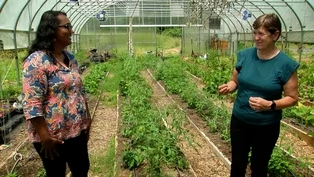
Video has Closed Captions
Clip: S26 Ep4 | 7m 55s | Learn how crops from India grow in Central Virginia (7m 55s)
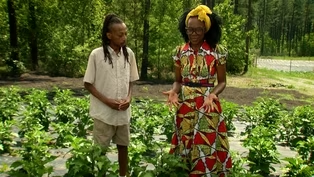
Video has Closed Captions
Clip: S26 Ep4 | 7m 46s | Meet a farmer connecting her community with food (7m 46s)
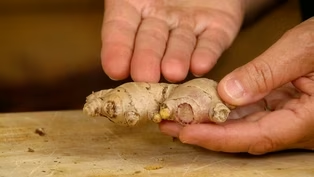
Video has Closed Captions
Clip: S26 Ep4 | 5m 12s | Learn tips to grow ginger in a container (5m 12s)
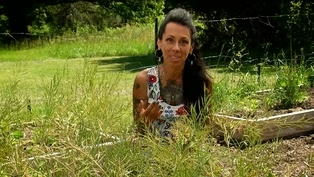
Video has Closed Captions
Clip: S26 Ep4 | 3m 8s | Discover how saving seeds carries on cultural traditions (3m 8s)
Video has Closed Captions
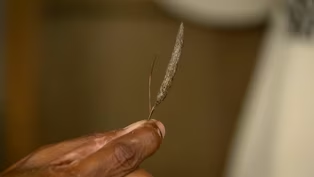
Clip: S26 Ep4 | 6m 10s | Get tips for growing plants from seed (6m 10s)
Video has Closed Captions
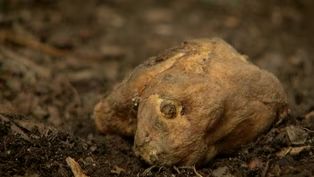
Clip: S26 Ep4 | 3m 16s | Set your garden up for success when trying to grow new plants (3m 16s)
Providing Support for PBS.org
Learn Moreabout PBS online sponsorship

- Home and How To

Hit the road in a classic car for a tour through Great Britain with two antiques experts.
 New Episode





 New Episode




Support for PBS provided by:
Virginia Home Grown is a local public television program presented by VPM